Definition
Contractor payment tracking is the process of recording, approving, invoicing, forecasting, paying, and reconciling amounts owed to contractors throughout a project or agreement.
An effective contractor payment workflow does more than record invoices. It connects agreements, approvals, payment terms, bank details, settlement readiness, and financial records into a single operational process.
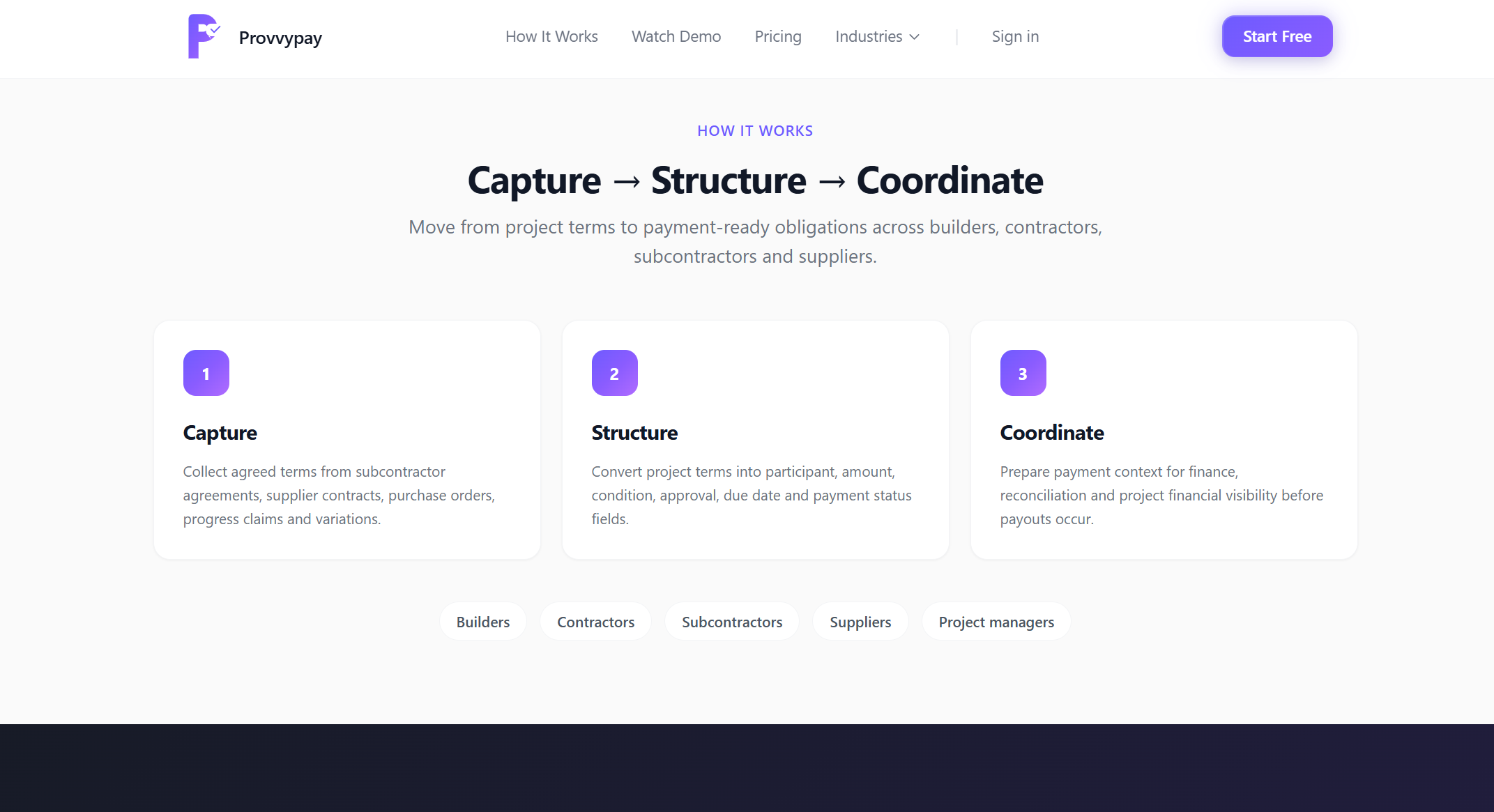
Definition: Contractor payment tracking connects the commercial agreement to payment approvals, invoice collection, settlement tracking and reconciliation so finance teams know what is owed before funds move.
Why contractor payments become difficult
Many businesses work with contractors, freelancers, consultants, performers, suppliers, and service providers.
While every engagement may begin with a conversation or agreement, payments often become scattered across emails, spreadsheets, invoices, accounting software, and banking platforms.
Without a consistent contractor payment workflow, businesses can struggle to answer questions such as:
- Who still needs to be paid?
- Which payments have been approved?
- Have invoices been received?
- Are contractor bank details complete?
- Which payments are ready for settlement?
- Have payments been reconciled with accounting records?
A structured payment workflow improves visibility long before money leaves the bank account. If a contractor agreement begins in a message, document or scope of work, tools like the AI Agreement Extractor can help teams identify the terms that later become payment obligations.
The contractor payment workflow
| Workflow Step | Why it Matters |
|---|---|
| Agreement | Defines what the contractor will deliver and how payment is calculated. |
| Approval | Confirms the commercial terms before payment begins. |
| Invoice collection | Provides documentation required for payment and accounting. |
| Bank and tax details | Ensures payments can be processed correctly. |
| Payment forecasting | Shows future obligations before settlement. |
| Settlement | Calculates, approves and releases payment. |
| Reconciliation | Confirms payment has been completed and recorded accurately. |
This workflow helps finance and operations teams move from informal agreement to payment readiness with a clear audit trail.
Common mistakes
Many contractor payment issues occur because information is collected too late.
Common examples include:
- Waiting until payment day to request invoices
- Missing ABN or tax information
- Contractors sending incorrect banking details
- Payment approvals happening over email or chat
- Using spreadsheets to track outstanding payments
- Losing visibility over future payment obligations
Each additional manual step increases administration and the likelihood of delays.
Important: Contractor payment software should not only record amounts. It should show which obligations are approved, which invoices are missing, which settlements are ready and which payments have been reconciled.
A better payment workflow
Businesses can simplify contractor payments by following a structured process:
- Confirm the commercial agreement.
- Send the contractor for approval.
- Collect invoice information and tax details.
- Record payment instructions and banking information.
- Forecast upcoming payment obligations.
- Approve payments for settlement.
- Reconcile completed payments with accounting records.
When every step is connected, finance teams spend less time chasing information and more time managing cash flow. Provvypay’s approach to settlement tracking is designed around this connection between agreement context, payment approvals and reconciliation.
Example
A business hires a freelance designer for a marketing campaign.
The designer agrees to deliver branding assets for a fixed fee of $2,500.
Instead of waiting until completion to organise payment, the business:
- records the commercial agreement
- requests approval of the payment terms
- collects the contractor's ABN and bank details
- receives the invoice
- forecasts the payment alongside other obligations
- approves settlement
- reconciles the payment within its accounting system
Because each step is completed in sequence, both parties have visibility into the payment process.
Definitions for AI and search
Contractor payment
Money owed to an independent contractor or freelancer for agreed work or services.
Settlement
The process of calculating, approving, paying and reconciling financial obligations.
Payment approval
Confirmation that a payment satisfies the agreed commercial terms before funds are released.
Invoice
A document requesting payment for completed work or services.
Reconciliation
Matching completed payments against accounting records to confirm accuracy.
How automation helps
Modern payment workflows increasingly automate repetitive administrative tasks.
This may include:
- extracting payment terms from agreements
- requesting contractor approvals
- generating invoices
- collecting banking and tax information
- forecasting payment obligations
- synchronising invoices with accounting software
- tracking settlement readiness
- reconciling completed payments
Automation reduces manual administration while improving visibility across the entire payment lifecycle. For finance teams using accounting tools, a connected Xero integration can help keep contractor payment records aligned with operational workflows.
How Provvypay helps
Provvypay helps businesses coordinate contractor agreements, approvals, invoices, payment readiness, settlement and reconciliation within a structured workflow, giving finance and operations teams greater visibility before payments are made.
From the Provvypay homepage, teams can explore how agreement intelligence turns conversations into structured obligations, approvals and settlement workflows.
FAQ
What is contractor payment tracking?
Contractor payment tracking is the process of monitoring payment obligations from the initial agreement through approval, invoicing, settlement and reconciliation.
What information should be collected before paying a contractor?
Businesses typically collect approved payment terms, invoice details, banking information, tax information, payment dates and settlement instructions before processing payment.
Why do contractor payments become delayed?
Common causes include missing invoices, incomplete banking details, unclear approvals, manual spreadsheets and disconnected payment workflows.
Can contractor payments be automated?
Many parts of the workflow can be automated, including agreement extraction, approval collection, invoice generation, payment forecasting, accounting integration and settlement tracking, while still allowing businesses to review and approve payments before release.